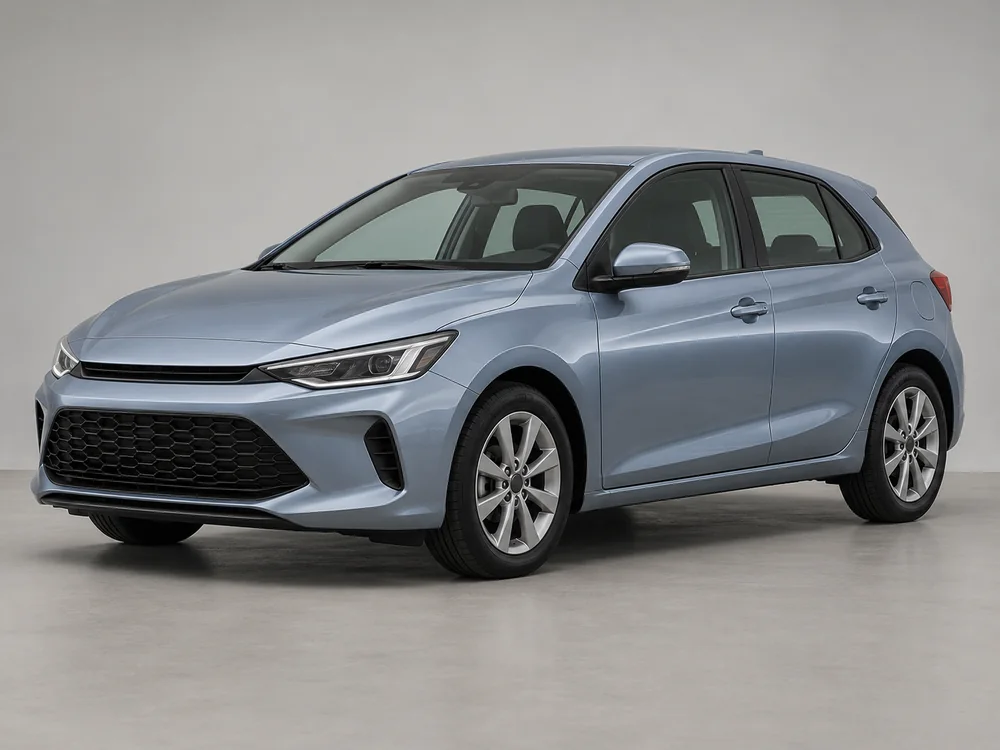






What the tyre needs
| Common sizes | 165/65 R14, 175/65 R14, 185/65 R15, 185/60 R15, 195/55 R16, 205/55 R16, 225/40 R18 |
|---|---|
| Cold pressure | 30–36 psi |
| Load and speed | Small hatchbacks typically need a load index of 79–88 with a T or H speed rating. Larger and sporty hatchbacks such as the Golf and Mini Cooper S use 91–94 with V or W ratings, often XL. Mini models fitted with run-flats are marked RSC, RFT or SSR on the sidewall. |
| Replace every | Small hatchbacks often get 45,000–60,000 km from a set because they are light, but many are driven short distances and reach five years first. Hot hatches on performance tyres usually need fronts every 25,000–35,000 km. |
| Price per tyre | AED 160 – AED 650 |
Recommended tyre types
- Eco or low rolling resistance touring tyres for small city cars
- Touring tyres for mid-size hatchbacks
- UHP summer tyres for hot hatches such as the Golf GTI
- Run-flat tyres for Mini models that came without a spare
Cars in this class
Toyota Yaris, Kia Picanto, Kia Rio, Hyundai i10, Hyundai i20, Suzuki Swift, Suzuki Baleno, Nissan Micra, Honda Jazz, Volkswagen Golf, Mini Cooper, MG3
Small tyres, small prices, same safety rules
Hatchback tyres are the cheapest to replace in the UAE: a 175/65 R14 for a Picanto or i10 starts at around AED 160–200 per tyre from a value brand, and even premium options rarely pass AED 400. That makes it easy to buy a good tyre without stretching the budget.
The same safety rules apply as on larger cars. Legal minimum tread is 1.6 mm, tyres should be replaced at around five years, and the load index on the placard must be matched. Small tyres have less rubber to lose, so they reach the wear bars faster in kilometres than you might expect.
Cheaper does not have to mean older or weaker. Always ask for the DOT code before buying: a six-month-old value tyre will perform better in a UAE summer than a premium tyre that has spent three years in a warehouse. For delivery cars covering 40,000 km or more a year, a mid-range tyre with longer tread life pays back the price difference within a year.
City driving, heat and short trips
Most hatchbacks in Dubai, Sharjah and Ajman are used for short city trips, school runs and delivery work, with lots of stop-start driving, roundabouts and speed bumps. That pattern wears the front shoulders and exposes the tyres to kerb strikes when parking in tight streets in Al Nahda, Al Barsha or Al Majaz.
Because annual mileage is often low, age becomes the limiting factor. A hatchback parked outside in summer, with tyres on 65–70°C tarmac for hours a day, can show sidewall cracking in four years. Check the DOT code and the sidewalls, not just the tread.
- Check pressures monthly; small tyres lose a bigger share of pressure per psi
- Rotate every 8,000–10,000 km to spread front-tyre wear
- Inspect sidewalls after kerb contact in tight parking
- Replace at five years even if the tread looks fine
Hot hatches and Mini run-flats
Performance hatchbacks such as the Golf GTI and Golf R, Mini Cooper S and John Cooper Works, and Hyundai i20 N need UHP tyres in 17–19 inch sizes such as 225/40 R18. These cars are front-heavy and send power through the front wheels, so the fronts can wear twice as fast as the rears.
Most Mini models leave the factory on run-flat tyres and have no spare. Run-flats have stiff sidewalls and let you drive about 80 km at up to 80 km/h after a puncture. Replacing them with standard tyres is possible, but you would then need a sealant kit or space-saver, and the suspension was tuned for run-flats.
Choosing a brand for a hatchback
For small city hatchbacks, a fresh mid-range tyre from Hankook, Kumho or Nexen is usually the best value, since it will age out before it wears out. Roadstone and Triangle are sensible for budget-focused owners and older cars.
For hatchbacks that do daily highway runs, such as commuting from Sharjah to Dubai on the E311, a premium touring tyre from Bridgestone, Michelin or Continental gives shorter braking distances and better stability in crosswinds, which a light car feels more than a heavy one.
Brands we recommend
- Bridgestone — Bridgestone is the world's largest tyre maker by revenue and a strong premium choice for UAE heat, especially on Toyota and Lexus vehicles that often leave the factory on Bridgestone.
- Michelin — Michelin is the safest long-term buy for most UAE drivers: it typically outlasts rivals by 10,000–15,000 km and holds its grip and shape well in 45–50°C summers.
- Continental — Continental makes the best wet-braking tyres of the major brands and some of the quietest, which suits European cars and anyone who drives the UAE's highways at night or in winter rain.
- Hankook — Hankook is the strongest-value brand for most UAE drivers: its Ventus tyres come close to premium performance at AED 300–700 per tyre in 16–18 inch sizes, around 30–40% below Michelin.
- Kumho — Kumho is a Korean mid-range brand that gives decent grip and comfort at AED 250–580 per tyre in 16–18 inch sizes, roughly half the price of Michelin.
- Nexen — Nexen is a Korean value brand and one of the cheapest reputable options in the UAE, at AED 220–520 per tyre in 16–18 inch sizes.
- Roadstone — Roadstone is the value sister brand of Korea's Nexen Tire, and in the UAE it costs about AED 220–480 per tyre in common 16–18 inch sizes.
- Triangle — Triangle is one of China's largest tyre makers, based in Weihai, Shandong, and in the UAE its car tyres cost about AED 170–420 each in 15–18 inch sizes.
Tyre sizes by model
- Toyota Agya
- Toyota Aqua
- Nissan Aura
- Nissan Dayz
- Lexus CT
- Mitsubishi Colt
- Mitsubishi Delica D:2
- Hyundai Accent
- Hyundai Grand i10
- Kia Ceed
- Kia Cerato
- Mercedes-Benz A-Class AMG
- BMW i3
- Honda Brio
- Honda Civic 5d
- Ford Fiesta Active
- Ford Figo
- Chevrolet Beat
- Chevrolet Bolt
- Tesla Model S
- Audi A1 allstreet
- Audi A1 citycarver
Other vehicle types
Sedan · SUV · Coupe and Sports Car · Off-Road 4x4 · Pickup Truck · Luxury Car and Luxury SUV · Electric Vehicle (EV)