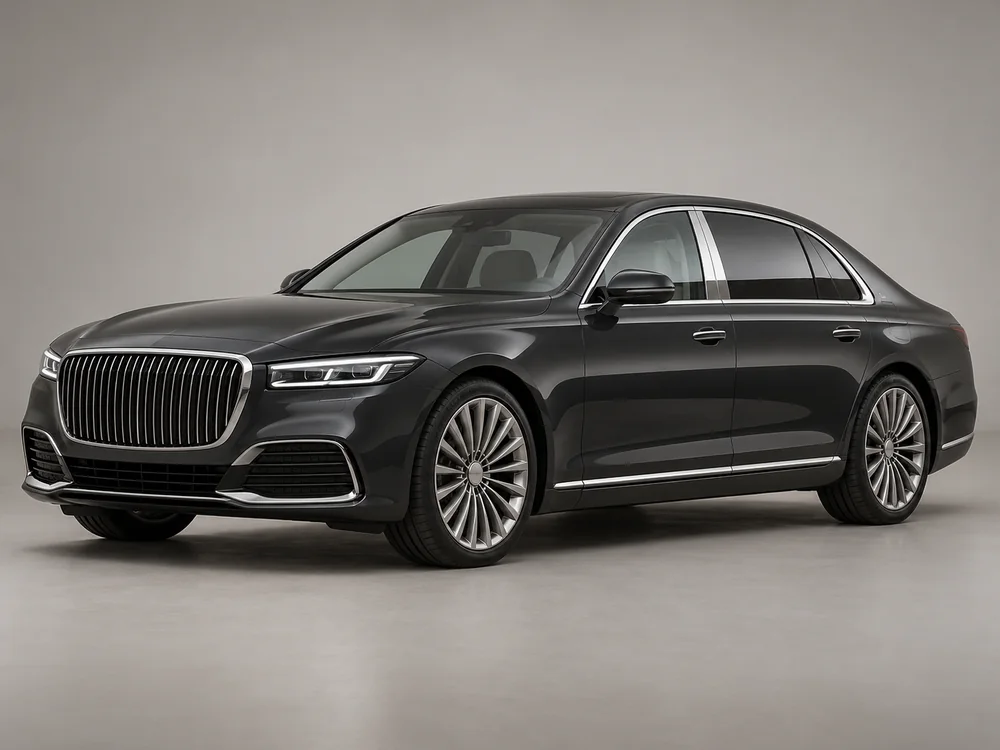






What the tyre needs
| Common sizes | 245/45 R19, 255/45 R20, 275/40 R20, 275/40 R21, 285/40 R22, 275/50 R22, 285/35 R23 |
|---|---|
| Cold pressure | 32–42 psi |
| Load and speed | Luxury sedans typically need load index 98–103 XL with W or Y rating; luxury SUVs 107–116 XL with V, W or Y rating. Many BMW and Mercedes models use run-flats, and some use different sizes front and rear. Speed and load ratings on these cars are high because of weight and performance, not just top speed. |
| Replace every | Luxury sedan tyres usually last 30,000–45,000 km and luxury SUV tyres 30,000–50,000 km, less on staggered or performance setups. Wide, soft tyres also age quickly in heat; replace at about five years and sooner if the sidewalls crack. |
| Price per tyre | AED 700 – AED 2,800 |
Recommended tyre types
- Maker-approved grand touring tyres (MO, star, N0, AO, J/LR)
- Run-flat tyres where the car was designed for them
- Acoustic tyres with internal foam to reduce cabin noise
- Performance SUV tyres for Cayenne, Range Rover Sport and similar
Cars in this class
Mercedes-Benz S-Class, Mercedes-Benz GLS, BMW 7 Series, BMW X7, Range Rover, Lexus LS, Lexus LX, Porsche Cayenne, Audi Q8, Cadillac Escalade, Bentley Bentayga, Rolls-Royce Cullinan
Why maker-approved tyres matter on luxury cars
Luxury car makers develop tyres with the tyre companies for each model, tuning the compound, sidewall stiffness and noise to suit the car's suspension. These versions are marked on the sidewall: MO, MO1 or MO-S for Mercedes-Benz, a star for BMW and Rolls-Royce, N0–N4 for Porsche, AO for Audi, J or LR for Jaguar Land Rover, and B for Bentley.
A non-marked tyre in the same size will fit and is legal, but the car may feel different: more road noise, a vaguer steering feel or slightly different braking. On cars with adaptive air suspension and advanced driver aids, matching the original specification avoids surprises. Mixing marked and unmarked tyres on one axle should be avoided.
- MO, MO1, MO-S: Mercedes-Benz and Mercedes-AMG
- Star: BMW and Rolls-Royce
- N0, N1, N2: Porsche
- AO, RO1: Audi
- J, LR: Jaguar and Land Rover
- B: Bentley
Run-flats, acoustic foam and self-sealing tyres
Many BMW and some Mercedes-Benz models leave the factory on run-flat tyres, which allow about 80 km at up to 80 km/h after a puncture. These cars often have no spare. Replacing run-flats with standard tyres changes the ride and leaves you without a fallback, so most owners stay with run-flats.
Higher-end tyres increasingly include features inside the tyre: a polyurethane foam ring that cuts cabin noise (Continental ContiSilent, Pirelli PNCS, Michelin Acoustic) or a sealant layer that closes small punctures (Continental ContiSeal, Pirelli Seal Inside). Both are worth matching on luxury cars, and both need care when repairing a puncture, since the foam must be cut back around the repair.
Large wheels, low profiles and UAE roads
Luxury SUVs on 22 and 23 inch wheels, such as the Range Rover, Escalade, Bentayga and Cullinan, use tyres with sidewalls as low as 35–40 series. That leaves little cushion against potholes, speed bumps in residential communities, and the steep ramps into many Dubai tower car parks. Pinched sidewalls and bent rims are the most common luxury tyre damage we see.
These cars are also heavy, often 2.5–2.9 tonnes, so tyres need high load indexes and XL construction. Combined with soft, grippy compounds, that means they wear faster than tyres on mainstream SUVs, typically 30,000–50,000 km, and they need careful pressure maintenance in summer.
Approach kerbs and car park ramps at an angle and slowly, keep pressures at the placard figure rather than a few psi low for comfort, and check the inside of the rims after any hard hit. A small bulge on a 35 series sidewall means internal cords are broken, and the tyre must be replaced, not monitored.
Fitting luxury tyres at your location
We fit luxury tyres up to 22 inches at villas, office car parks and residential towers using machines with plastic-protected heads, wheel-safe lifting pads, and a calibrated torque wrench set to each maker's figure. TPMS sensors are handled carefully and relearned on site for most models.
For 23 inch fitments, very wide rear tyres, or cars that need specific procedures such as air suspension service mode, we either attend with additional equipment or book a partner workshop. We confirm which applies before quoting.
Brands we recommend
- Michelin — Michelin is the safest long-term buy for most UAE drivers: it typically outlasts rivals by 10,000–15,000 km and holds its grip and shape well in 45–50°C summers.
- Pirelli — Pirelli is the go-to brand for high-performance and luxury cars in the UAE, with the sharpest dry handling of the premium brands and OE fitments on Ferrari, Lamborghini, Porsche, BMW and Mercedes.
- Continental — Continental makes the best wet-braking tyres of the major brands and some of the quietest, which suits European cars and anyone who drives the UAE's highways at night or in winter rain.
- Bridgestone — Bridgestone is the world's largest tyre maker by revenue and a strong premium choice for UAE heat, especially on Toyota and Lexus vehicles that often leave the factory on Bridgestone.
- Goodyear — Goodyear is a well-priced premium brand in the UAE, with strong wet grip from the Eagle F1 range and tough Wrangler tyres for 4x4s and pickups.
- Dunlop — Dunlop tyres sold in the UAE are made by Japan's Sumitomo Rubber and offer Japanese build quality at a mid-range price, AED 320–750 per tyre in 16–18 inch sizes.
- Yokohama — Yokohama is a Japanese mid-to-upper brand best known in the UAE for its Geolandar 4x4 tyres, especially the Geolandar A/T G015 on Patrols and Land Cruisers.
- Hankook — Hankook is the strongest-value brand for most UAE drivers: its Ventus tyres come close to premium performance at AED 300–700 per tyre in 16–18 inch sizes, around 30–40% below Michelin.
Other vehicle types
Sedan · SUV · Coupe and Sports Car · Off-Road 4x4 · Hatchback · Pickup Truck · Electric Vehicle (EV)