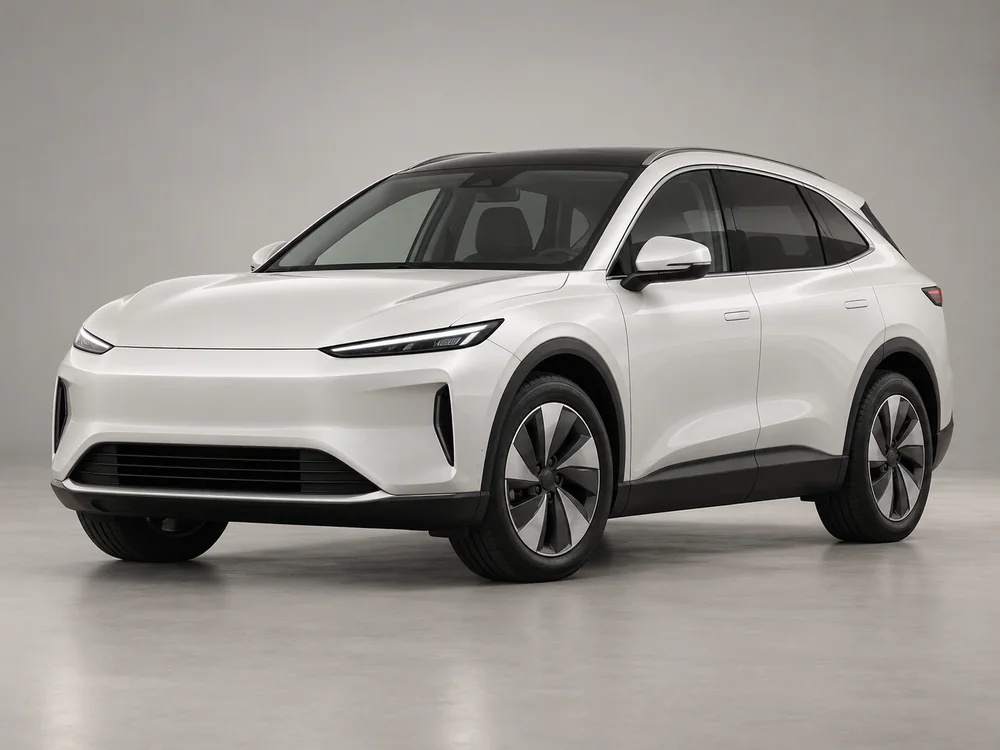






What the tyre needs
| Common sizes | 215/55 R18, 235/45 R18, 235/55 R19, 255/45 R19, 255/40 R20, 275/35 R21 |
|---|---|
| Cold pressure | 36–45 psi |
| Load and speed | EVs are heavy for their size, so most need XL (extra load) tyres with load indexes of 98–105 on sedans and 104–110 on SUVs, and many recent models specify HL (high load) tyres. Speed ratings of V, W or Y are common. Fitting a standard-load tyre in the right size is a frequent and unsafe mistake on EVs. |
| Replace every | Expect 25,000–45,000 km from a set on most EVs, less on dual-motor performance versions driven hard. Rotate every 8,000–10,000 km and check alignment yearly; EVs are sensitive to inner-edge wear. |
| Price per tyre | AED 450 – AED 1,600 |
Recommended tyre types
- EV-specific tyres with low rolling resistance and high load capacity
- XL or HL marked tyres matching the placard load index
- Acoustic tyres with internal foam (often marked T0, Acoustic or Silent)
- UHP tyres for performance EVs such as Model 3 Performance and Taycan
Cars in this class
Tesla Model 3, Tesla Model Y, Tesla Model S, Tesla Model X, BYD Atto 3, BYD Seal, Hyundai Ioniq 5, Kia EV6, Polestar 2, Zeekr 001, Mercedes-Benz EQS, BMW iX
Why EVs wear tyres faster
EV tyres wear faster for two reasons: weight and torque. A Tesla Model Y weighs about 2 tonnes, roughly 300–400 kg more than a petrol SUV of similar size, because of the battery pack. And an electric motor delivers full torque from zero, so every brisk start from a traffic light scrubs rubber from the driven tyres.
Regenerative braking adds to the effect on the driven axle. In practice, most EV owners in the UAE see 25,000–45,000 km from a set, compared with 40,000–60,000 km on an equivalent petrol car. Smooth acceleration and regular rotation can push that toward the top of the range.
XL, HL and EV-specific tyres
Because EVs are heavy, the correct replacement must meet the load index on the placard, and on most EVs that means an XL tyre. A standard-load 235/45 R18 carries 94 (670 kg); the XL version carries 98 (750 kg). Fitting standard-load tyres to save money leaves them overloaded, running hot in UAE summer.
A newer marking, HL (high load), appears on tyres for the heaviest EVs and carries even more weight at the same size. EV-specific ranges such as the Michelin Pilot Sport EV, Pirelli P Zero Elect, Hankook iON, Continental EcoContact 6 Q and Goodyear ElectricDrive combine high load capacity, low rolling resistance and noise reduction.
- XL: extra load, required on most EVs
- HL: high load, for the heaviest EVs and some new models
- T0: Tesla-approved tyres, often with acoustic foam
- Elect, EV, iON: EV-optimised ranges from Pirelli, Michelin and Hankook
Range, rolling resistance and pressure
Tyres affect EV range more than most owners expect. Switching from a low rolling resistance EV tyre to a sticky performance tyre can cut range by 5–10%, and running 4–5 psi below the placard costs a few percent more.
EV placards specify higher pressures than most petrol cars: Tesla Model 3 and Model Y use 42 psi cold, and many other EVs use 36–41 psi. Summer heat pushes hot pressures 5–7 psi above that, which is normal; do not let air out of a hot tyre. In UAE heat, underinflation on a heavy EV is the bigger risk.
Lifting, TPMS and fitting an EV safely
EVs must be lifted only at their designated jack points, usually marked with pads under the sills, to avoid damaging the battery pack that runs under the floor. Our technicians use rubber lifting pucks and the correct points for Tesla, BYD, Hyundai, Kia, Polestar and Zeekr models.
Many EV tyres have acoustic foam bonded inside, which must be cut back cleanly if a puncture is repaired, and many EVs need the TPMS sensors relearned through the car's menu or a scan tool. On Teslas, the car usually picks up new sensors after a short drive. We handle all of this on site in Dubai, Abu Dhabi, Sharjah and Ajman.
Brands we recommend
- Michelin — Michelin is the safest long-term buy for most UAE drivers: it typically outlasts rivals by 10,000–15,000 km and holds its grip and shape well in 45–50°C summers.
- Continental — Continental makes the best wet-braking tyres of the major brands and some of the quietest, which suits European cars and anyone who drives the UAE's highways at night or in winter rain.
- Pirelli — Pirelli is the go-to brand for high-performance and luxury cars in the UAE, with the sharpest dry handling of the premium brands and OE fitments on Ferrari, Lamborghini, Porsche, BMW and Mercedes.
- Hankook — Hankook is the strongest-value brand for most UAE drivers: its Ventus tyres come close to premium performance at AED 300–700 per tyre in 16–18 inch sizes, around 30–40% below Michelin.
- Goodyear — Goodyear is a well-priced premium brand in the UAE, with strong wet grip from the Eagle F1 range and tough Wrangler tyres for 4x4s and pickups.
- Bridgestone — Bridgestone is the world's largest tyre maker by revenue and a strong premium choice for UAE heat, especially on Toyota and Lexus vehicles that often leave the factory on Bridgestone.
- Yokohama — Yokohama is a Japanese mid-to-upper brand best known in the UAE for its Geolandar 4x4 tyres, especially the Geolandar A/T G015 on Patrols and Land Cruisers.
- Kumho — Kumho is a Korean mid-range brand that gives decent grip and comfort at AED 250–580 per tyre in 16–18 inch sizes, roughly half the price of Michelin.
Other vehicle types
Sedan · SUV · Coupe and Sports Car · Off-Road 4x4 · Hatchback · Pickup Truck · Luxury Car and Luxury SUV