





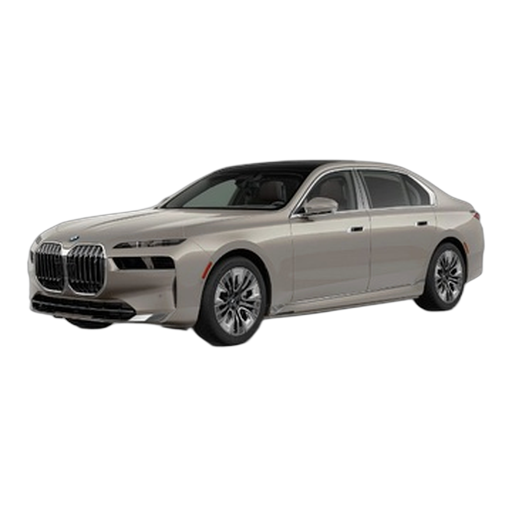
BMW i7 tyre sizes
| Size | Cold pressure | Price per tyre |
|---|---|---|
| 205/55 R16 | 32–36 psi | AED 230–AED 750 |
| 215/55 R17 | 32–36 psi | AED 230–AED 750 |
| 235/45 R18 | 32–36 psi | AED 230–AED 750 |
These are typical sizes for the sedan class. Sizes vary by year and trim, so we confirm yours from a photo before driving out.
Model years in our data: 2022–2026.
BMW tyre tips
- A star symbol on the sidewall marks a tyre approved by BMW for that model; it is the safest like-for-like choice.
- Run-flat tyres (RSC or RFT) let you drive about 80 km at 80 km/h after a puncture, but most should be replaced rather than repaired after running flat.
- Switching from run-flats to conventional tyres is legal but leaves you without a spare, so carry a sealant kit or call mobile tyre service.
- M cars and many X5 and X7 trims use staggered sizes; always replace in axle pairs with the same brand and pattern.
Common factory tyres on BMW: Bridgestone, Pirelli, Michelin, Continental, Goodyear.
Tyre brands that suit the BMW i7
- Michelin — AED 450–AED 1,050 per tyre
- Bridgestone — AED 400–AED 950 per tyre
- Continental — AED 420–AED 1,000 per tyre
- Yokohama — AED 330–AED 800 per tyre
- Hankook — AED 300–AED 700 per tyre
When to replace the tyres
Expect 40,000–60,000 km from a set on a front-wheel-drive sedan with regular rotation, and replace at around five years regardless of tread. Front tyres wear faster, so rotating every 8,000–10,000 km makes a real difference.
Most sedans need a load index of 88–98 and a speed rating of H (210 km/h) or V (240 km/h). Larger sedans on 18 inch wheels often specify 94W or 95V XL. Always match or exceed the figures on the door placard.
Other BMW models
1 Series · 2 Series · 2 Series Active Tourer · 2 Series Gran Coupe · 2 Series Gran Tourer · 3 Series · 4 Series · 4 Series Gran Coupe · 5 Series · 6 Series Gran Turismo · 7 Series · 8 Series